
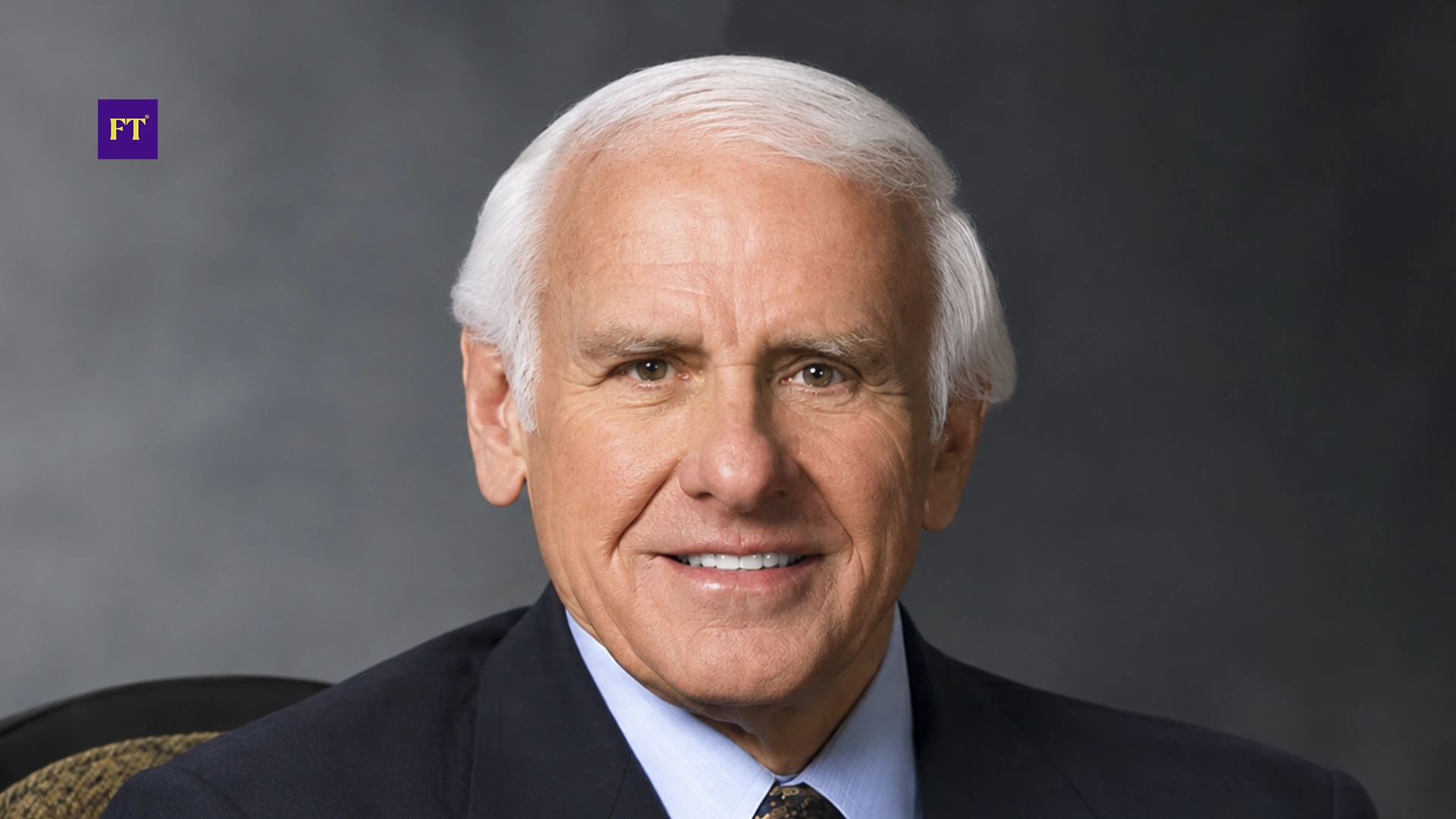
 Photo by FT
Photo credit: Getty Images
- Jim Rohn’s career as an entrepreneur, author, and motivational speaker drew on lessons in discipline, goal setting, personal responsibility, and financial success.
- His teachings stressed that wealth depends on more than income, with spending habits, savings, financial knowledge, and informed money management affecting long-term results.
- Rohn’s philosophy extended beyond money to personal growth, education, relationships, and life priorities, influencing later speakers such as Tony Robbins.
YAKIMA, Wash., Oct. 23, 2026 — Jim Rohn spent more than four decades speaking about business, wealth, goal setting, and personal responsibility. His seminars and books addressed entrepreneurs, sales professionals, executives, and readers interested in career and financial success. Rohn argued that a high income does not guarantee wealth. Spending decisions, saving habits, and money management determine how much income a person retains and accumulates.
Born Emanuel James Rohn on September 17, 1930, in Yakima, Washington, he grew up on a farm in Idaho during the Great Depression. At 25, while raising a young family and experiencing financial difficulties, he met entrepreneur Earl Shoaff. Shoaff mentored Rohn on discipline, goal setting, and personal responsibility. Rohn joined Shoaff’s direct-selling business in 1955 and later worked at Nutri-Bio, a direct-selling company Shoaff co-founded in 1957. Rohn’s experience in sales preceded his career as a speaker and author.
Rohn began his public speaking career in 1963 and later delivered seminars across the United States and internationally. His 1996 book 7 Strategies for Wealth & Happiness discusses goal setting, financial management, education, personal growth, and the use of time. Rohn died on December 5, 2009. His books and recorded lectures preserve his teachings on personal responsibility, professional success, and financial management.
Shoaff Mentored Rohn
Shoaff influenced Rohn’s early career and his views on personal responsibility. Through direct sales, Rohn gained business experience before establishing himself as a speaker and author. He later drew on lessons about goal setting, discipline, and learning in his seminars.
Rohn’s career illustrates how mentorship can influence professional decisions. Experienced businesspeople can share lessons about sales, management, and professional conduct, but their advice must be assessed against an individual’s circumstances. Financial recommendations require similar scrutiny. Income, debt, savings, monthly expenses, and future obligations all affect whether a recommendation suits a person’s needs.
Daily Habits Affect Wealth
Rohn argued that repeated decisions affect financial results over time. Applied to personal finance, this principle means recording income and expenses, setting savings targets, paying bills on time, and limiting purchases that exceed the budget. Tracking transactions reveals spending patterns and shows how much money remains after essential bills.
Rohn also urged people to take responsibility for their choices. Financial hardship, however, can result from job loss, low wages, medical bills, or family obligations, not just spending decisions. A household budget must account for housing, food, utilities, transportation, debt payments, and irregular expenses. When income falls short of essential costs, cutting discretionary spending may not close the gap.
Financial Knowledge Matters
Rohn encouraged people to learn by reading, listening, and studying other people’s experiences. His book 7 Strategies for Wealth & Happiness discusses goal setting, acquiring knowledge, personal growth, money management, time management, personal relationships, and life satisfaction. These subjects connect financial goals with the habits and decisions that affect a person’s career and daily life.
Financial literacy requires specific knowledge of interest rates, credit, taxes, retirement accounts, and investment risk. Comparing annual percentage rates helps borrowers evaluate loan costs. Understanding compound interest shows savers how interest can accumulate over time. Investors need to assess fees, possible losses, and the risks associated with different assets.
Rohn’s motivational teachings encourage learning but do not replace technical financial education. Decisions about loans, savings accounts, retirement plans, and investments require accurate information about fees, terms, tax implications, and potential losses. His work can encourage readers to seek that knowledge, but financial products must be evaluated on their own terms.

Photo credit: Getty Images
Success Beyond Wealth
Rohn did not define success solely by income or accumulated assets. His writing also addressed relationships, education, personal conduct, and the use of time. In 7 Strategies for Wealth & Happiness, he discusses financial management alongside personal goals and life priorities, rather than treating money as the only measure of success.
Rohn also influenced motivational speaker and author Tony Robbins, who has credited him as an early mentor. Robbins has discussed Rohn’s influence on his career and teaching. Rohn’s books, recorded seminars, and lectures have kept his ideas available to later generations of readers and listeners.
Rohn distinguished earning money from managing it. His teachings encouraged people to examine their habits, set goals, and take responsibility for their financial decisions. Financial literacy adds the technical knowledge needed to compare borrowing costs, assess savings options, and evaluate investment risks. Income alone does not determine how much wealth a person accumulates; spending, debt, saving, and investment decisions also affect the result.
Rohn’s book 7 Strategies for Wealth & Happiness discusses goal setting, acquiring knowledge, personal growth, money management, time management, personal relationships, and life satisfaction. These subjects connect financial goals with the habits and decisions that affect a person’s career and daily life.
Related Topics

How Smart Devices Help You Understand Money and Reach Your Financial Goals
Smart devices give you a clear picture of your spending, energy use, and health costs, making it easier to stay on top of your money and build savings.
By

Money and Mindset Go Hand in Hand
Financial success isn’t just about the money you earn. It’s about the way you think, plan, and act with it every day.
By

Why Half of Americans Struggle with Everyday Money
Many adults lack the basic skills needed to budget, save, and plan for the future, leaving them unprepared for life’s financial challenges.
By

Money & Mindset: 6 Steps to Create a Positive Mindset
A positive mindset does not eliminate challenges. It equips you to respond to them with clarity and purpose.
By