
 Photo by FT
Image credit: Allianz
- Only 17% of respondents across the eight countries reached the highest financial literacy level.
- Generation Z led U.S. saving intentions, with 60% planning to save more, followed by 51% of millennials.
- Nearly 60% of U.S. respondents overestimated the inflation rate, ranking the country third among those surveyed.
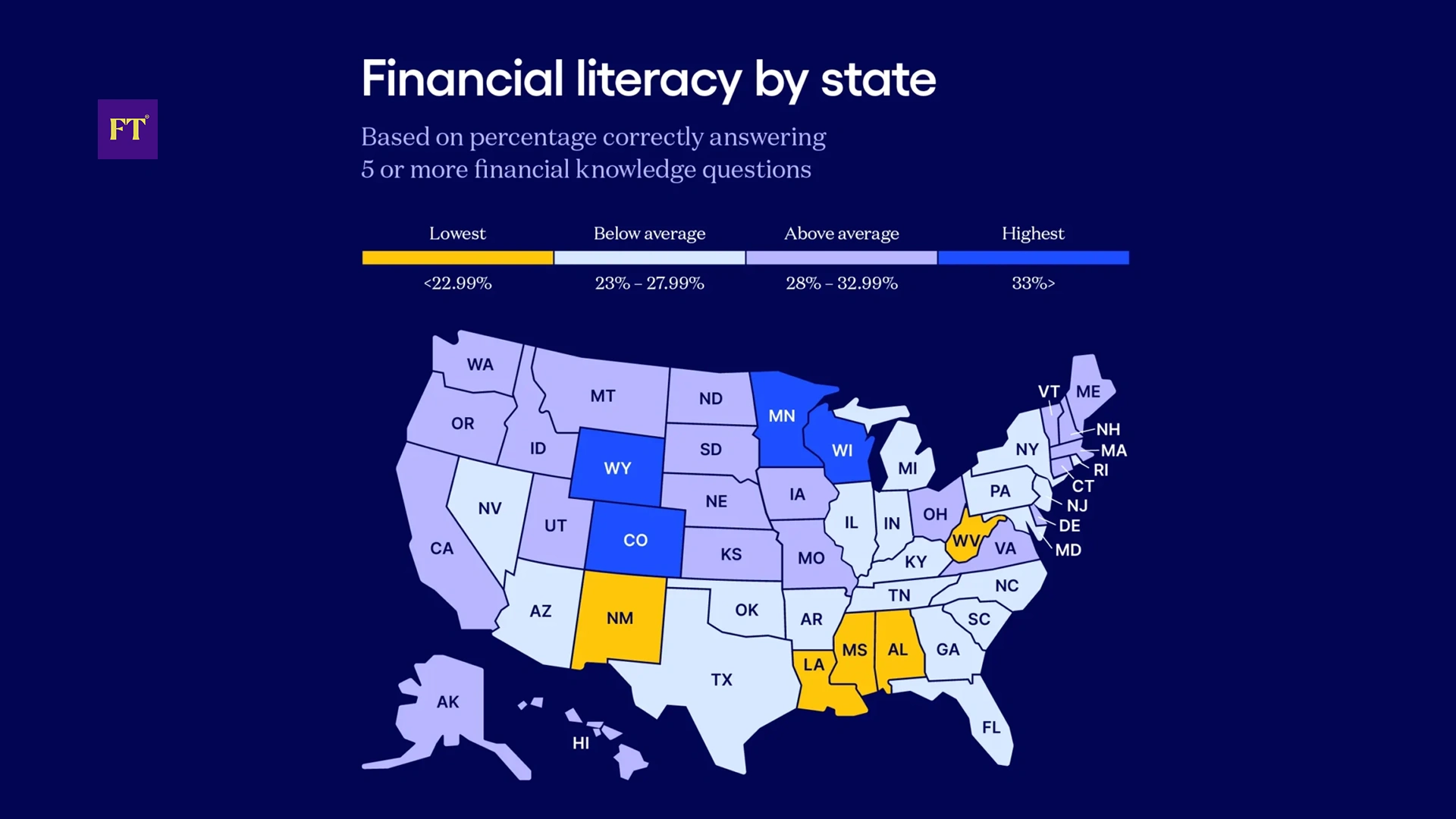
WASHINGTON, August 19, 2026 — Americans have a pronounced desire to save but continue to struggle with basic financial concepts, according to a new study from Allianz Research. The fourth edition of Allianz’s financial literacy survey ranked the U.S. last among eight developed countries, with notable gaps in knowledge of compound interest, inflation, risk and diversification.
The web-based survey questioned more than 8,000 adults in the U.S., U.K., Germany, France, Austria, Italy, Poland and Spain during April and May. One-third of U.S. respondents fell into the low financial literacy category, the largest share among the countries surveyed, while only 13% reached the highest category. The U.K. recorded the strongest result, with 23% of respondents classified as highly financially literate.
Financial Knowledge Remains Weak
Financial literacy was limited across all eight countries, with only 17% of respondents reaching the highest level. Allianz said the figure had changed little from its 2023 survey, suggesting that wider access to financial products and digital services has not necessarily led to stronger knowledge of basic financial principles. Ludovic Subran, chief investment officer and chief economist at Allianz, said financial literacy provides a foundation for building, protecting and growing wealth over a lifetime.
The researchers also noted that individuals are taking on more responsibility for wealth accumulation and retirement planning as financial products become more sophisticated and private provision becomes more important. They said understanding compound interest, inflation, risk and diversification is therefore becoming more important as people make more financial decisions themselves.
U.S. Saving and Financial Literacy
Despite its low financial literacy scores, the U.S. stood out for its willingness to save. It was the only country surveyed where the largest share of respondents said they planned to increase their savings. Generation Z led among U.S. respondents, with 60% saying they planned to save more, followed by 51% of millennials.
The survey found little difference in financial literacy among U.S. generations. Younger Americans, despite growing up with investing apps and greater digital access to financial services, did not show substantially stronger financial knowledge than Baby Boomers. Allianz also found a gender gap across every generation, with men nearly twice as likely as women to fall into the highest financial literacy category.

Photo credit: Allianz
Inflation Remains Difficult to Understand
The survey showed that inflation remains difficult for many households to assess. Across the eight countries, only 28% of respondents estimated the inflation rate correctly. Another 48.7% estimated it too high, while 23.3% estimated it too low.
The U.S. recorded one of the highest rates of overestimation, with almost 60% of American respondents putting the inflation rate above its actual level. Allianz said an inaccurate view of inflation can affect how households assess the real return on their savings and how much money they believe they have available to invest.
Artificial intelligence has become a regular source of financial information for many consumers, but Allianz found that frequent AI use does not necessarily correspond with stronger financial capability. Across the countries surveyed, 48% of respondents reported using AI at least twice a week. In the U.S., 22% identified AI as one of their primary sources of financial advice, above the international average.
The findings point to a need for stronger financial education alongside greater access to digital advice. Allianz researchers called for governments to include financial education in schools and adult learning programs. They also said employers can provide workplace education and retirement guidance, while financial institutions can support consumers through simpler products, higher advice standards, digital tools and AI-supported guidance that helps households move from saving toward long-term investing.
The survey showed that inflation remains difficult for many households to assess. Across the eight countries, only 28% of respondents estimated the inflation rate correctly. Another 48.7% estimated it too high, while 23.3% estimated it too low.
Related Topics

How Smart Devices Help You Understand Money and Reach Your Financial Goals
Smart devices give you a clear picture of your spending, energy use, and health costs, making it easier to stay on top of your money and build savings.
By

Money and Mindset Go Hand in Hand
Financial success isn’t just about the money you earn. It’s about the way you think, plan, and act with it every day.
By

Why Half of Americans Struggle with Everyday Money
Many adults lack the basic skills needed to budget, save, and plan for the future, leaving them unprepared for life’s financial challenges.
By

Money & Mindset: 6 Steps to Create a Positive Mindset
A positive mindset does not eliminate challenges. It equips you to respond to them with clarity and purpose.
By