
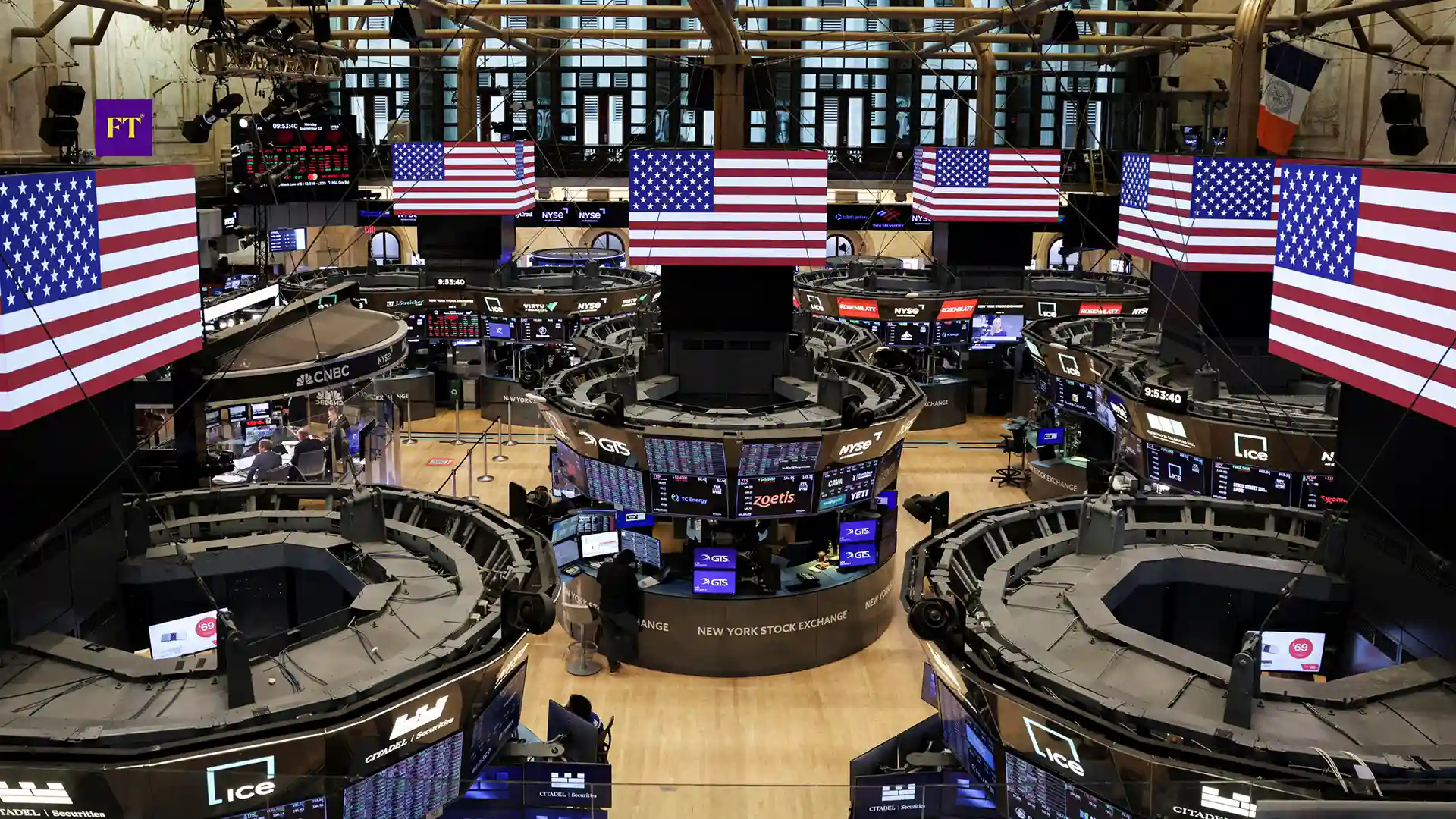
 Photo by FT
- The U.S. stock market lets investors buy and sell shares of American companies every day, giving them a way to own part of a business while companies raise funds for growth.
- Stock prices move based on supply and demand, company performance, economic indicators, and global events, reflecting investor expectations in real time.
- Trading happens through brokers on major exchanges like the NYSE and Nasdaq, with different order types and extended hours allowing flexibility while market rules ensure transparency and fairness.
NEW YORK, March 11, 2026 — The U.S. stock market is where the stocks of American companies are listed and traded. A stock represents a piece of ownership in a company, and the market allows investors to buy and sell those shares every day. Technology now makes it possible to place trades from websites or mobile apps, making U.S. stocks accessible worldwide. Investors in other countries, including India, can also participate by opening overseas trading accounts or investing via mutual funds and exchange-traded funds (ETFs).
Understanding Stocks and Their Purpose
Companies sell stocks to raise funds that can be used for expansion, research, or reducing debt. This process often begins with an initial public offering, or IPO, when a private company issues shares to the public for the first time. After the IPO, the company’s shares enter the secondary market, where investors trade them among themselves. The company benefits only during the IPO or when it issues new shares later, while subsequent trades occur between investors.
Owning stock gives investors a claim on the company’s assets and earnings. Stock prices rise and fall as investors weigh the company’s performance, industry trends, and broader economic factors. Prices are not fixed; they adjust continually based on the actions of buyers and sellers.
How Trading Happens
Most trading occurs on two main U.S. exchanges -- the New York Stock Exchange (NYSE) and Nasdaq. The NYSE is the oldest and largest U.S. exchange, while Nasdaq hosts many technology and growth-oriented companies. Investors place orders through brokers, which act as intermediaries connecting buyers and sellers.
How Orders Work: When an investor decides to buy or sell a stock, they place an order through a broker. A market order executes immediately at the best available price. A limit order only executes at a specified price or better. Some investors use other order types, such as stop orders, which become market orders once a certain price is reached. Each order feeds into electronic systems that match buyers with sellers. When a trade completes, ownership transfers from the seller to the buyer, and the stock’s market price updates to reflect that transaction.
Trading Hours and Market Access: The main exchanges operate from Monday to Friday, typically 9:30 a.m. to 4:00 p.m. Eastern time. However, many brokers allow pre-market and after-hours trading, giving investors more flexibility to react to news or earnings announcements outside regular sessions. Trading volumes and price movements can differ during these extended hours, so investors should be aware of liquidity and volatility when placing orders.
Trading is influenced by supply and demand. If more people want to buy a stock than sell it, the price rises. If more people want to sell than buy, the price falls. This constant adjustment establishes the market price of each stock at any given moment.
What Influences Stock Prices
Stock prices react to several factors. Company performance, such as earnings, revenue, product launches, and leadership changes, plays a major role. Economic indicators, including interest rates, inflation, and GDP growth, also affect investor decisions. Industry trends, technological developments, and regulatory shifts influence market sentiment, while global events such as geopolitical tensions or trade agreements can cause sudden price movements. Media coverage, analyst opinions, and social sentiment further shape investor behavior.
How Company Results Affect Stock Prices: Investors often respond immediately to corporate earnings reports. For example, when a major tech company reports profits above expectations, investors may rush to buy shares, pushing the price higher. Conversely, if the same company reports weaker-than-expected earnings, selling pressure can cause the stock to drop.
Economic news also drives trading. A sudden rise in interest rates by the Federal Reserve can make borrowing more expensive, prompting investors to sell stocks and shift money into safer assets like bonds. Strong GDP growth or falling unemployment, on the other hand, can increase investor confidence, boosting stock prices.
Global events also ripple through the market. Trade agreements, geopolitical tensions, or supply chain disruptions can affect both individual companies and entire sectors. For instance, news of tariffs on imported goods may lower the stock prices of companies that rely heavily on international suppliers. Likewise, a breakthrough in renewable energy technology might drive up the share prices of companies positioned to benefit.
These examples show how stock prices are not determined randomly but emerge from continuous interactions between investor expectations, company performance, economic trends, and global developments. Each trade reflects a judgment about value in the moment, making price movements a real-time signal of how investors perceive risks and opportunities.
The Role of Indexes: Indexes provide a way to track the performance of multiple stocks at once. The S&P 500 includes the top 500 U.S. companies by market capitalization. The Nasdaq Composite tracks more than 3,000 Nasdaq-listed stocks, while the Dow Jones Industrial Average follows 30 prominent companies. These indexes give investors a snapshot of market trends and help guide portfolio decisions, including strategies that mimic the performance of broad market segments.
Regulation and Oversight
The U.S. stock market is regulated by the Securities and Exchange Commission (SEC). Established in 1934, the SEC enforces securities laws, monitors trading, and requires companies to disclose financial information. These rules ensure transparency, fairness, and investor protection. Additional measures, such as circuit breakers, pause trading temporarily during extreme market swings to prevent panic and allow investors to make informed decisions.
Participating in the Market
The U.S. stock market includes individual investors, mutual funds, pension funds, hedge funds, and large institutional players. Investors may trade frequently or hold shares for years. Brokers, clearing firms, and exchanges ensure that trades settle correctly and funds move smoothly. For beginners or international investors, ETFs and mutual funds offer a way to invest in U.S. stocks without buying individual shares.
Through these mechanisms, the U.S. stock market allows companies to access capital while giving investors a platform to trade ownership stakes. Prices continuously adjust to reflect supply and demand, company performance, economic conditions, and global events. By understanding how the market works and how price movements respond to company performance and economic trends, investors can make informed decisions and better assess both opportunities and risks.
Most trading occurs on two main U.S. exchanges -- the New York Stock Exchange (NYSE) and Nasdaq. The NYSE is the oldest and largest U.S. exchange, while Nasdaq hosts many technology and growth-oriented companies. Investors place orders through brokers, which act as intermediaries connecting buyers and sellers.
Related Topics
8 Stocks Under $10 Morgan Stanley Rates Overweight
These companies operate across digital freight, banking, autonomous vehicles, data centers, electric vehicles, and energy.
By
15 Dividend-Paying Stocks to Consider in October
Fifteen large-cap stocks with dividend yields of at least 2% and positive year-to-date returns offer investors a range of income opportunities across major industries, based on data as of October 8, 2026.
By