
 Photo by FT
Asset Allocation Calculator
- An Asset Allocation Calculator helps investors estimate portfolio distribution based on factors such as financial goals, investment duration, age, and risk preference.
- By reviewing different asset categories, investors can better understand portfolio structure, diversification, and the relationship between risk and potential returns.
- Regular allocation reviews help investors adjust their investment plans as financial goals, personal circumstances, and priorities change.
NEW YORK, July 15, 2026 — Asset allocation refers to the process of dividing investments among different asset categories, including stocks, bonds, cash, real estate, and alternative assets. The purpose is to create a portfolio that matches an investor’s financial goals, investment timeline, and tolerance for price fluctuations. An Asset Allocation Calculator helps individuals estimate how their money may be distributed across different investment categories by using details such as age, financial objectives, investment duration, and risk preference. The results provide investors with a reference point for reviewing their portfolio structure and understanding how different asset classes may fit within their financial plans.
Investors often face many choices when deciding how to distribute their savings. Equity investments may provide opportunities for long-term growth, while fixed-income assets may offer income generation and reduced volatility. Cash holdings may provide liquidity, while other asset categories may add diversification. The calculator does not replace professional financial guidance, but it can help investors organize their thoughts before making investment decisions. Asset allocation is not a one-time decision, as financial priorities, personal circumstances, and investment goals may change over time. Regular reviews can help investors determine whether their portfolio continues to match their requirements.
How an Asset Allocation Calculator Works
An Asset Allocation Calculator uses investor details to generate a suggested distribution among different asset groups. Information such as age, income, financial goals, expected investment duration, and willingness to accept fluctuations may be used to create an estimated allocation plan. A younger investor with a longer investment period may consider a larger equity allocation because there is more time to manage short-term price changes. An investor closer to retirement may prefer a greater focus on income-producing assets and capital preservation.
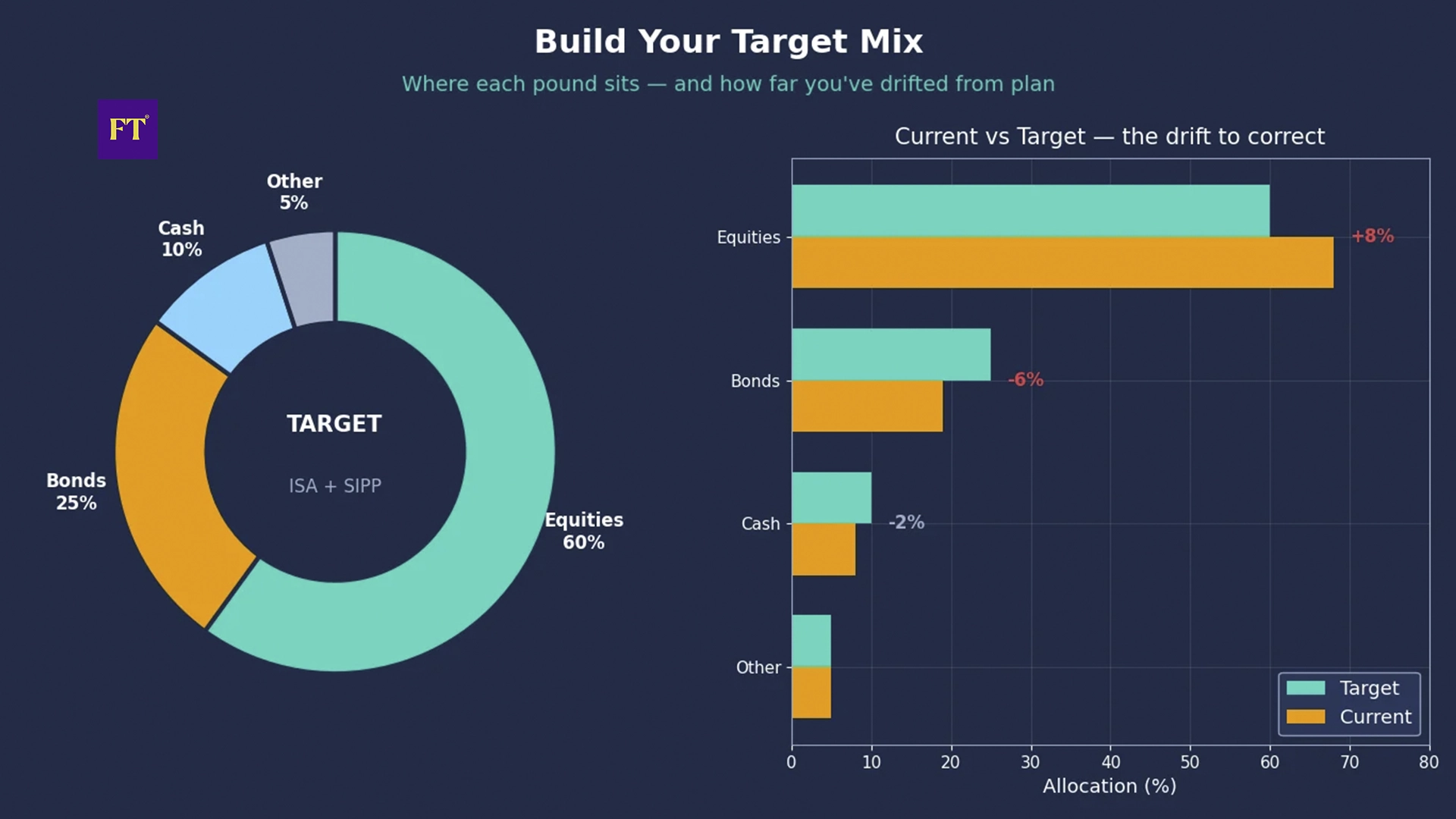
Different calculators may use different formulas and assumptions when generating results. Some focus mainly on age-based allocation, while others consider financial goals, investment duration, and risk preferences. The calculator may show suggested percentages for equities, bonds, cash, and other categories, allowing investors to review how their current holdings compare with their desired allocation. The value of this tool comes from helping individuals organize their investment decisions and understand how each asset group contributes to their overall portfolio structure.
Benefits of Reviewing Portfolio Allocation
A well-planned asset allocation strategy can help investors manage risk by spreading investments across multiple categories. When one asset class experiences weaker performance, other holdings may provide balance within the portfolio. The calculator can also help investors understand the connection between risk and potential returns. Portfolios with larger equity allocations may experience greater price movement, while portfolios with higher allocations toward bonds and cash may experience fewer fluctuations. This information allows investors to consider whether their current investment distribution matches their financial goals and personal preferences.
Investors can use allocation tools when preparing for major financial milestones, including retirement planning, education savings, or long-term wealth creation. The calculator encourages individuals to review their entire portfolio rather than focusing only on individual stocks, funds, or other assets. It may also help identify areas where a portfolio has excessive exposure to one category, allowing investors to review alternative options. A balanced distribution among different asset classes may reduce dependence on a single investment type and provide a more organized structure for managing finances.
Factors to Consider Before Using the Calculator
Although an Asset Allocation Calculator can provide useful guidance, investors should remember that financial decisions require personal evaluation. The results depend on the information entered by the user, and changes in financial circumstances may require adjustments. Investment goals play an important role in determining suitable allocation choices. Someone saving for a short-term purchase may select different investments compared with someone planning for retirement over several decades. Risk tolerance also matters because two investors with similar financial backgrounds may choose different allocations based on their comfort with investment fluctuations.
Investors should review additional factors such as fees, taxes, and the characteristics of individual investments before making decisions. Each asset category includes various investment options with different levels of risk, cost, and return potential. Regular portfolio reviews can help investors adjust their allocation when personal priorities change, including career developments, family milestones, or changes in savings objectives. An Asset Allocation Calculator serves as an educational resource that helps individuals examine portfolio distribution, understand investment choices, and create plans that align with their financial goals.
An Asset Allocation Calculator uses investor details to generate a suggested distribution among different asset groups. Information such as age, income, financial goals, expected investment duration, and willingness to accept fluctuations may be used to create an estimated allocation plan.
Related Topics

Financial Tools to Plan, Track, and Grow Your Money
An expense tracker records and categorizes daily spending across different categories such as food, transport, rent, utilities, subscriptions and discretionary expenses.
By

What is an SIP Calculator and Why It Matters
An SIP calculator helps convert regular saving behavior into a structured financial projection. Many investors find it difficult to understand how small monthly contributions can result in large accumulated values over long periods. The tool provides a numerical estimate that connects present contributions with future value.
By

What is an EMI Calculator
An EMI calculator uses a standard loan formula based on the principal amount, interest rate, and loan tenure. When these values are entered, the tool calculates a fixed monthly installment that remains constant throughout the repayment period.
By

What is a Retirement Calculator
Consider a person who saves a fixed amount every month and continues this pattern until retirement age. The calculator estimates how these contributions may grow over time based on an assumed rate of return.
By