
 Photo by FT
Net Worth Calculator
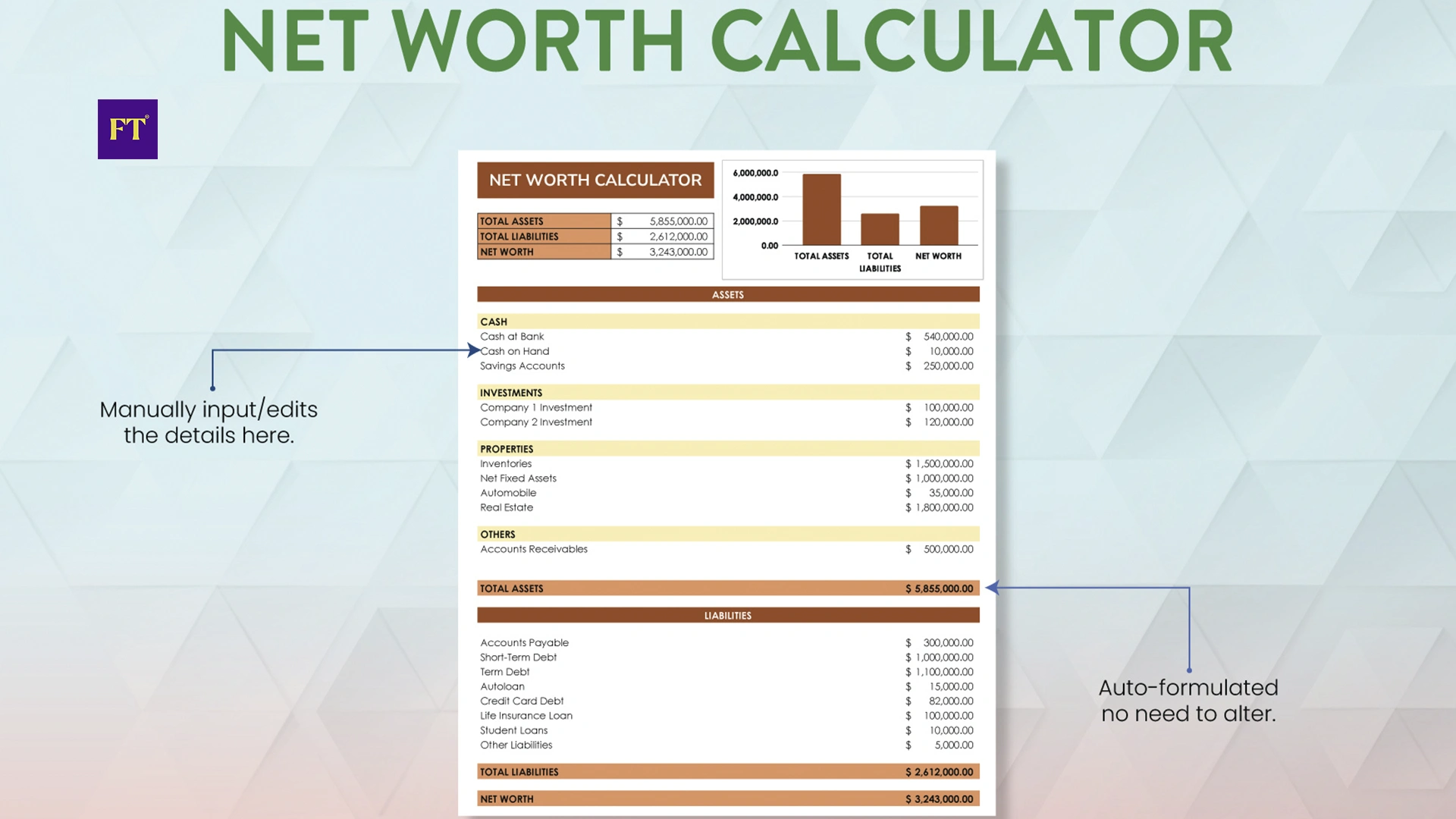
- A net worth calculator measures the difference between total assets and total liabilities, providing a snapshot of an individual's financial position.
- Unlike income alone, net worth reflects accumulated wealth over time by accounting for savings, investments, property ownership, and outstanding debt.
- Regular net worth calculations can help track financial progress, assess long-term goals, and support informed financial planning decisions.
NEW YORK, June 13, 2026 — Many people evaluate their financial situation based primarily on income. While earnings play an important role in determining financial capacity, income alone does not reveal how much wealth a person has accumulated over time. Two individuals earning the same salary may have vastly different financial circumstances depending on their savings habits, investments, debt levels, and ownership of valuable assets.
A net worth calculator offers a more complete assessment by measuring the difference between what a person owns and what they owe. This figure, known as net worth, serves as an important indicator of financial health because it reflects the cumulative outcome of years of financial decisions. Rather than focusing on monthly earnings or expenses alone, a net worth calculation captures the bigger picture.
Financial advisors, lenders, and wealth management professionals frequently examine net worth when assessing an individual's financial standing. For households, entrepreneurs, and investors, understanding net worth can provide meaningful insight into wealth creation and financial progress.
How a Net Worth Calculator Works
The concept behind a net worth calculator is relatively straightforward. Users enter the value of their assets and liabilities, and the calculator determines the difference between the two totals.
Assets represent anything of monetary value owned by an individual. These may include cash held in savings accounts, checking account balances, retirement funds, stocks, bonds, mutual funds, real estate properties, vehicles, business ownership interests, and valuable personal possessions. Each asset contributes to the total wealth owned by the individual.
Liabilities represent financial obligations and outstanding debts. Common examples include mortgages, student loans, auto loans, credit card balances, personal loans, business debt, and unpaid taxes. These obligations reduce overall wealth because they represent amounts that must eventually be repaid.
Once all assets and liabilities are entered, the calculator subtracts total liabilities from total assets. If assets exceed liabilities, the result is a positive net worth. If liabilities exceed assets, the result is a negative net worth.
For example, an individual who owns assets valued at $1 million and carries debt totaling $400,000 would have a net worth of $600,000. This figure provides a concise summary of that person's financial position at a specific moment in time.
Why Net Worth Matters
Net worth serves as a financial scorecard that reflects long-term financial development. Unlike income, which measures earnings during a particular period, net worth captures the accumulation of wealth over many years.
Tracking net worth can help individuals understand whether their financial decisions are contributing to wealth growth. A growing net worth often indicates successful saving, investing, and debt management, while a declining net worth may signal financial challenges that require attention.
Many people use net worth calculations to evaluate progress toward major financial objectives. Retirement planning, homeownership goals, education funding, business expansion, and estate planning often benefit from regular net worth assessments. Since net worth incorporates both assets and liabilities, it provides a more comprehensive perspective than examining individual account balances in isolation.
Financial institutions may also review net worth when considering loan applications, business financing arrangements, or wealth management services. A strong net worth can demonstrate financial stability and borrowing capacity.
Tracking Financial Progress Over Time
One of the greatest advantages of a net worth calculator is its ability to track financial progress over months and years. A single calculation provides a snapshot, but repeated calculations create a timeline that reveals meaningful trends.
As savings accounts grow, investment portfolios appreciate, and debts decline, net worth may increase significantly. Even modest monthly contributions to retirement accounts or investment funds can produce substantial changes over long periods. Regular calculations allow individuals to observe these developments and evaluate whether they are moving toward their financial objectives.
Short-term fluctuations should not necessarily be interpreted as signs of financial success or failure. Real estate values may change, investment markets may experience volatility, and economic conditions can influence asset prices. Viewing net worth from a long-term perspective often provides a more accurate assessment of financial progress.
Many financial professionals recommend updating net worth calculations quarterly or annually. This frequency provides sufficient information to identify trends without becoming distracted by temporary market movements.
Common Challenges in Calculating Net Worth
Although net worth calculations appear straightforward, accuracy depends heavily on the quality of the information entered. One common challenge involves determining realistic asset values. Property owners may overestimate real estate values, while collectors may assign inflated figures to artwork, jewelry, or collectibles. Using conservative estimates generally produces more reliable results.
Another challenge arises when liabilities are overlooked. Smaller debts can sometimes be forgotten during calculations, particularly when individuals focus primarily on major obligations such as mortgages or student loans. Credit card balances, personal loans, and outstanding tax obligations should also be included to obtain a complete picture.
Asset values also change over time. Investment accounts fluctuate with market conditions, loan balances decline through repayments, and property values may increase or decrease. Regular updates help maintain accuracy and ensure that net worth calculations remain relevant.
It is also important to recognize that net worth represents only one aspect of financial health. Income stability, emergency savings, cash flow management, and retirement preparedness all contribute to overall financial well-being. Nevertheless, net worth remains one of the most widely used measurements because it summarizes wealth accumulation in a single figure.
Using Net Worth Data for Financial Planning
A net worth calculator can serve as more than a measurement tool. The information generated through regular calculations can support financial planning and decision-making across various stages of life.
Young professionals may use net worth tracking to monitor debt repayment and savings growth. Families may evaluate progress toward homeownership, education funding, or retirement objectives. Business owners may assess how company assets contribute to personal wealth, while retirees may use net worth calculations to manage long-term financial resources.
Because the calculation incorporates virtually every major financial asset and liability, it provides valuable context when evaluating future decisions. Whether considering a major purchase, refinancing debt, investing additional funds, or preparing an estate plan, understanding current net worth can provide a strong foundation for informed financial choices.
A net worth calculator remains one of the simplest yet most informative financial tools available. By presenting a complete picture of assets and liabilities, it helps individuals measure wealth accumulation, monitor financial progress, and gain a deeper understanding of their overall financial position.
A net worth calculator can serve as more than a measurement tool. The information generated through regular calculations can support financial planning and decision-making across various stages of life.
Related Topics

Financial Tools to Plan, Track, and Grow Your Money
An expense tracker records and categorizes daily spending across different categories such as food, transport, rent, utilities, subscriptions and discretionary expenses.
By

What is an SIP Calculator and Why It Matters
An SIP calculator helps convert regular saving behavior into a structured financial projection. Many investors find it difficult to understand how small monthly contributions can result in large accumulated values over long periods. The tool provides a numerical estimate that connects present contributions with future value.
By

What is an EMI Calculator
An EMI calculator uses a standard loan formula based on the principal amount, interest rate, and loan tenure. When these values are entered, the tool calculates a fixed monthly installment that remains constant throughout the repayment period.
By

What is a Retirement Calculator
Consider a person who saves a fixed amount every month and continues this pattern until retirement age. The calculator estimates how these contributions may grow over time based on an assumed rate of return.
By