
 Photo by FT
Portfolio Tracker
- Portfolio tracking software stores investment data across equities, mutual funds, ETFs, bonds, and digital assets, recording purchase values, transaction history, dividends, and current market valuations in one structured record for ongoing review.
- It organizes investment information by grouping transactions such as buys, sells, dividends, and transfers, while categorizing holdings by asset class, sector, or region and updating values through live or delayed market data feeds.
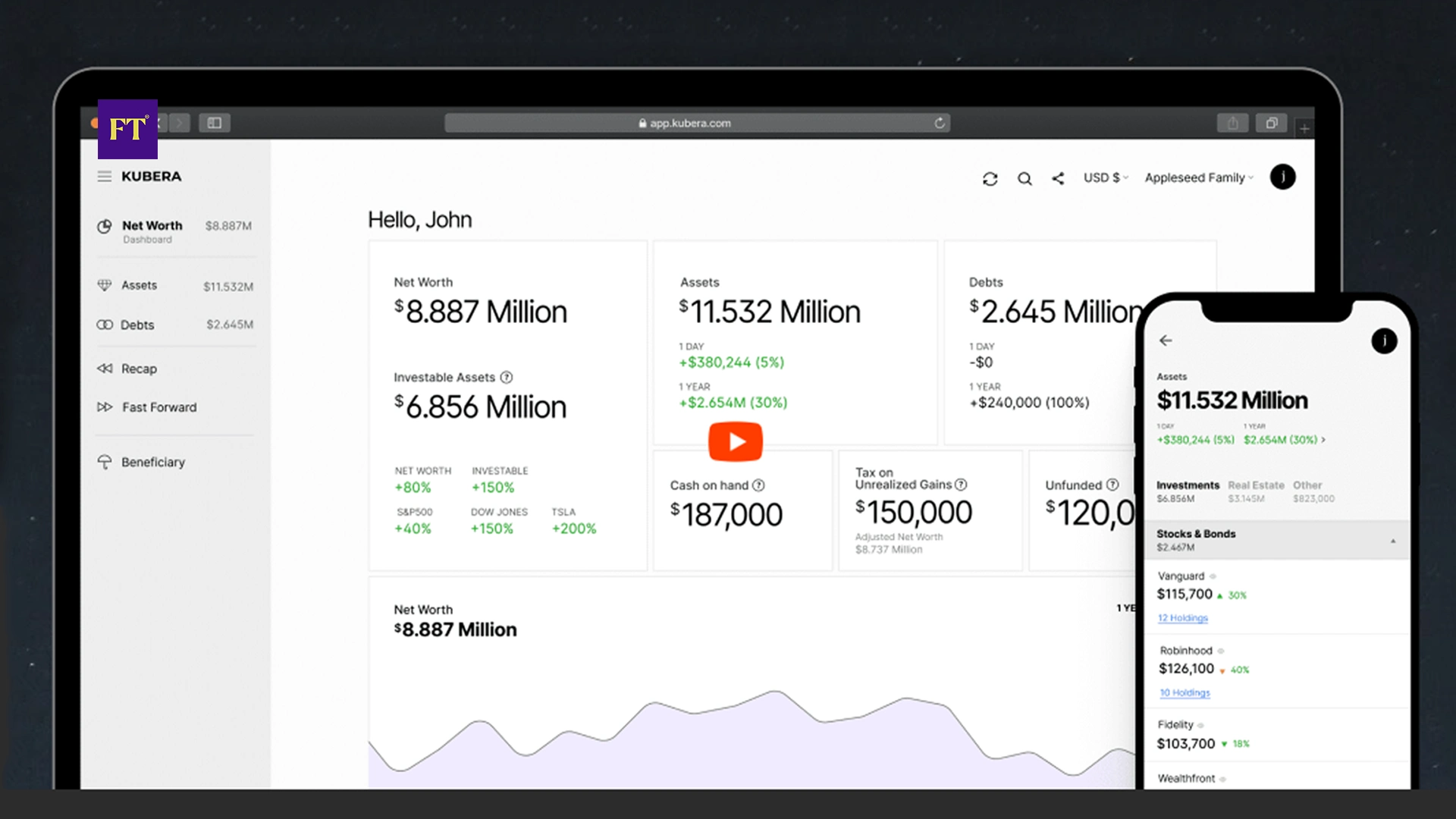
- Platforms such as Kubera Portfolio Tracking, Yahoo Finance, and Google Finance support consolidated dashboards that display performance history, allocation breakdowns, and portfolio-wide valuation updates across multiple accounts and asset types.
NEW YORK, June 24, 2026 — Portfolio tracking software provides a structured record of financial holdings across equities, mutual funds, exchange-traded funds, bonds, and digital assets. Each entry stores purchase value, transaction dates, income received through dividends, and current market valuation. This creates a consolidated record that allows investors to review movement in value across time and across different instruments.
How Portfolio Tracking Systems Organise Investment Data
Portfolio trackers gather information from brokerage accounts, fund houses, and manually entered transactions into one unified record. Every transaction is classified under categories such as purchase, sale, dividend credit, and transfer activity. Holdings are then grouped by asset class, sector grouping, and sometimes regional exposure, depending on the platform design.
Platforms such as Yahoo Finance and Google Finance support manual entry as well as account linking, allowing users to bring multiple holdings into a single dashboard. This structure reduces fragmentation across different brokers and account statements while improving visibility across all investments.
Market Data Feeds and Valuation Updates
Portfolio trackers rely on live or delayed data feeds that refresh valuations during trading hours. Each security is tied to a pricing source that updates value based on exchange activity or reference market data. This allows portfolios to reflect ongoing changes in valuation without manual recalculation.
Corporate actions such as stock splits, dividend payments, and bonus issues are recorded and applied to holdings automatically within most systems. Platforms like Morningstar Portfolio Manager also provide classification tools that break portfolios into categories such as sector distribution, fund type grouping, and style segmentation, giving a structured view of holdings across different dimensions.
Performance Review and Allocation Breakdown Tools
Portfolio trackers present performance summaries that show return history across selected time periods. These summaries often include cost basis comparison, realised gains, unrealised gains, and income generated through dividends or interest.
Allocation breakdowns display how investments are distributed across equities, fixed income instruments, cash holdings, and alternative assets. This helps investors observe concentration levels across holdings and identify areas where exposure is concentrated within specific categories. Historical views also show how portfolios have evolved through buying activity, selling activity, and reinvestment of income.
Selecting Portfolio Tracking Software for Individual Needs
The choice of portfolio tracking software depends on the number of accounts, the variety of assets, and the level of reporting detail required. Some platforms provide basic summaries of holdings, while others include tax reporting functions, export tools, and deeper analytical breakdowns of returns and income.
Interface design, data update frequency, and support for multiple brokerage integrations also influence selection. Investors managing diversified holdings often prefer systems that allow aggregation across multiple providers so that records remain consistent and easier to review across all accounts.
Kubera Portfolio Tracking
Kubera is a digital wealth tracking platform designed to consolidate financial assets across a wide range of holdings in one dashboard. It supports traditional investments such as stocks, ETFs, and mutual funds, alongside alternative assets including real estate, private equity, cryptocurrencies, bank accounts, domain names, and other non-standard financial holdings.
The platform focuses on providing a unified net worth view rather than limiting tracking to brokerage-linked securities. Users can manually add assets or connect financial institutions for automatic updates where integrations are available. It also supports multi-currency portfolios, allowing global investors to track assets denominated in different currencies with consolidated valuation reporting.
Kubera includes tools for portfolio categorisation and historical valuation tracking, enabling users to review changes in asset value over time. It is often used by individuals managing diversified or cross-border holdings who require a single consolidated view of financial positions across both liquid and illiquid assets.
Platforms such as Yahoo Finance and Google Finance support manual entry as well as account linking, allowing users to bring multiple holdings into a single dashboard. This structure reduces fragmentation across different brokers and account statements while improving visibility across all investments.
Related Topics

Financial Tools to Plan, Track, and Grow Your Money
An expense tracker records and categorizes daily spending across different categories such as food, transport, rent, utilities, subscriptions and discretionary expenses.
By

What is an SIP Calculator and Why It Matters
An SIP calculator helps convert regular saving behavior into a structured financial projection. Many investors find it difficult to understand how small monthly contributions can result in large accumulated values over long periods. The tool provides a numerical estimate that connects present contributions with future value.
By

What is an EMI Calculator
An EMI calculator uses a standard loan formula based on the principal amount, interest rate, and loan tenure. When these values are entered, the tool calculates a fixed monthly installment that remains constant throughout the repayment period.
By

What is a Retirement Calculator
Consider a person who saves a fixed amount every month and continues this pattern until retirement age. The calculator estimates how these contributions may grow over time based on an assumed rate of return.
By