
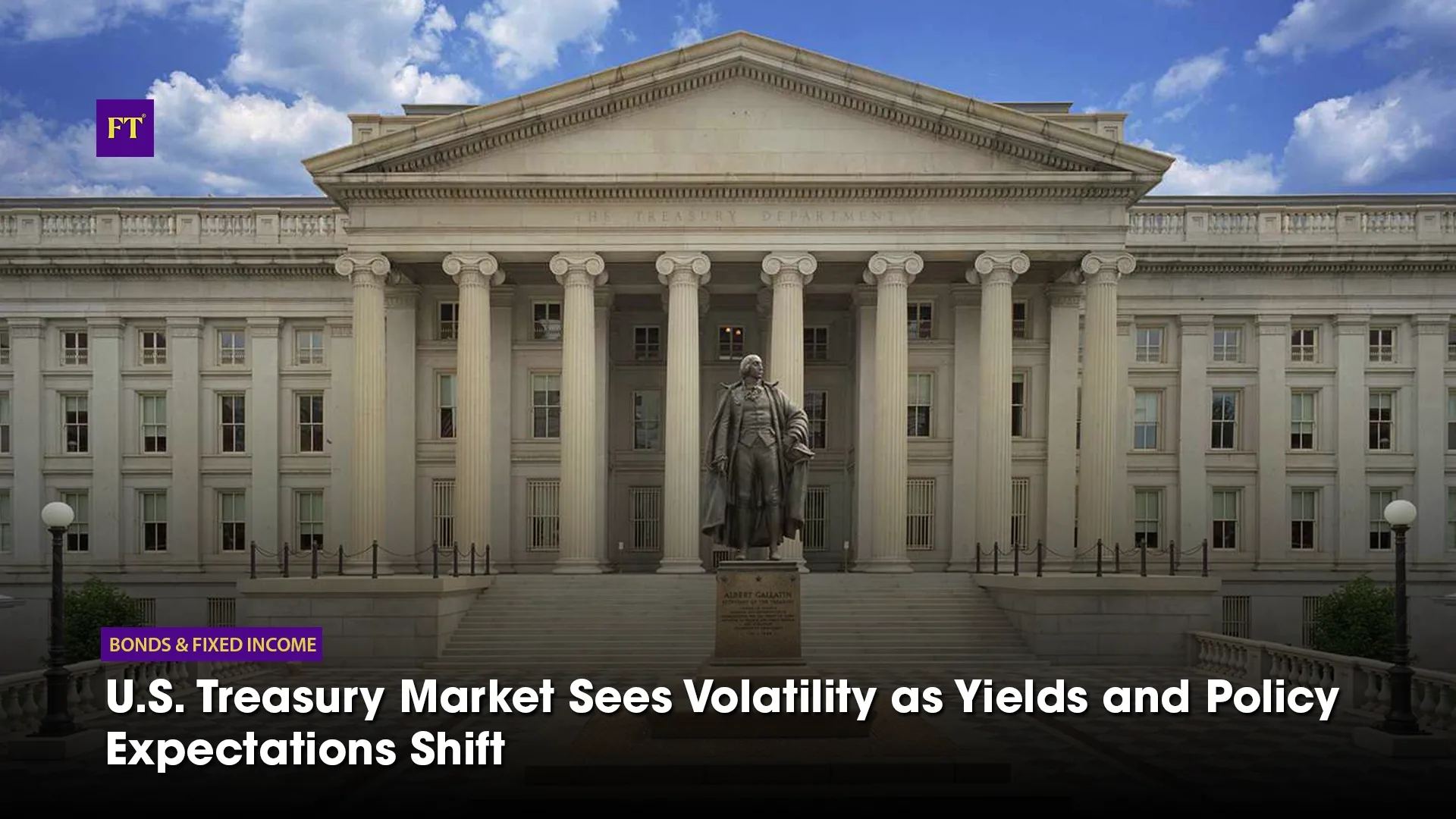
 Photo by FT
- Treasury yields are fluctuating as investors adjust positions in response to policy signals and economic data suggesting rates may stay higher for longer.
- Labor, consumer, and inflation data are shaping market sentiment and prompting recalibration across the yield curve.
- Global bond movements, currency shifts, and auction demand are influencing trading while investors balance short- and long-term maturities.
NEW YORK, Jan. 23, 2026 — The U.S. Treasury market has returned to turbulence, as yield movements reflect shifting expectations tied to policy and economic signals. Investors have recalibrated positions across the curve, responding to signals that suggest interest rates may remain elevated for longer than previously anticipated. Trading activity has reflected that reassessment, with benchmark yields moving as market participants weigh economic momentum against the outlook for future policy decisions.
Government bonds have remained sensitive to incoming data, particularly indicators tied to growth and inflation. That sensitivity has shaped price action in both short and long maturities, while reinforcing a more cautious tone among investors. As assumptions evolve, the yield curve has reflected differing interpretations of where policy and economic conditions may head next.
Policy Expectations Guide Treasury Trading
Expectations surrounding Federal Reserve policy continue to shape Treasury market behavior. Recent communications from policymakers have emphasized patience and reliance on incoming data, which has tempered earlier assumptions about near-term rate reductions. That shift has filtered quickly into bond pricing, especially in shorter maturities that are closely linked to the policy rate.
Two-year yields have adjusted as traders reassess the timing of potential easing, while longer-dated bonds have absorbed a broader mix of considerations tied to growth prospects and inflation risks. The result has been uneven movement along the curve, reflecting the absence of a single dominant view on the policy outlook.
At the same time, longer maturities have drawn attention from investors evaluating whether current yield levels offer value relative to historical norms. This divergence in positioning highlights how differing expectations can coexist within the same market, contributing to volatility without a uniform directional trend.
Economic Data Reshapes Market Sentiment
Economic releases have played a central role in reshaping sentiment across the Treasury market. Reports pointing to ongoing resilience in key areas of the economy have complicated expectations for monetary easing, prompting investors to revise assumptions embedded in bond prices. Each data point has reinforced the importance of near-term indicators in guiding rate expectations.
Labor and Consumer Signals Influence Yields: Labor market data has remained a focal point, with employment figures suggesting continued strength in hiring and wage growth. These signals have supported views that economic activity has not cooled enough to justify swift policy shifts. As a result, yields have adjusted to reflect a longer period of restrictive settings, particularly in the front and middle of the curve.
Consumer-related data has added to this narrative, with spending measures indicating sustained demand. Together, labor and consumer indicators have reinforced the idea that economic momentum remains intact, shaping how investors assess future rate paths and bond valuations.
Inflation Readings Add Nuance to Bond Pricing: Inflation data has introduced nuance rather than clarity, with some measures pointing to moderation while others suggest persistent price pressures. This mixed picture has led to frequent recalibration in Treasury trading, as investors weigh progress toward longer-term goals against evidence of lingering risks.
That ambiguity has contributed to yield movement rather than stability, as traders respond to each release with revised expectations. The bond market has reflected this process through shifting demand across maturities, rather than a uniform reaction across the curve.
Global Developments Influence U.S. Bonds
International factors have added another layer to Treasury market dynamics. Yield movements in other major economies have influenced relative value assessments, prompting cross-border flows that affect U.S. bond pricing. Changes in overseas government debt markets often ripple through Treasuries, particularly when global investors reassess allocation choices.
Currency movements have also played a role, as exchange rate fluctuations shape returns for foreign holders of U.S. debt. These considerations have influenced participation at auctions and activity in secondary markets, reinforcing the global nature of Treasury trading.
Geopolitical developments and policy signals abroad have further shaped sentiment, reminding investors that U.S. yields reflect both domestic fundamentals and external financial conditions.
Investor Positioning and Market Direction
Investor positioning has reflected a wide range of views on future yield direction. Some participants have favored shorter maturities, prioritizing flexibility amid uncertainty over policy timing. Others have focused on longer-dated bonds, viewing current yields as attractive given prevailing economic conditions.
Treasury auctions have offered insight into these dynamics, showing continued engagement despite yield fluctuations. Demand patterns have suggested selectivity rather than retreat, underscoring the enduring role of U.S. government debt in global finance.
As new data and policy signals emerge, Treasury trading is likely to remain responsive to shifts in expectations. The market continues to function as a barometer of views on growth, inflation, and monetary policy, with yields reflecting an ongoing process of reassessment rather than a settled consensus.
International factors have added another layer to Treasury market dynamics. Yield movements in other major economies have influenced relative value assessments, prompting cross-border flows that affect U.S. bond pricing.
Related Topics

Why Investors Turn to U.S. Treasury Bonds for Long-Term Security
Investors often consider Treasury Bonds for extended financial goals because interest payments and principal repayment are clearly defined.
By