
 Photo by FT
- Treasury Bonds are sold in 20- and 30-year terms through TreasuryDirect, paying fixed interest every six months with a minimum purchase of $100.
- Interest earned is subject to federal tax but exempt from state and local taxes, and bonds can be held to maturity or sold early for flexible portfolio management.
- Auctions occur regularly with competitive and non-competitive bids, ensuring transparency while providing investors predictable long-term income.
WASHINGTON, March 24, 2026 — Treasury Bonds are a type of marketable U.S. government security sold at auction and issued in terms of 20 years or 30 years. They are available exclusively in electronic form through TreasuryDirect accounts, making management and tracking straightforward. Each bond has a minimum purchase of $100, with additional increments in $100 units. The interest rate is set at auction and remains unchanged over the life of the bond. Investors receive interest payments every six months until the bond matures.
Interest earned is subject to federal taxation, but state and local taxes do not apply. Bonds can be held until maturity or sold early, offering flexibility for investors who may want to adjust holdings in response to financial needs or market changes.
Auction Process and Investment Structure
The U.S. Treasury conducts multiple auctions throughout the year. Original issues occur four times annually, and additional issues, known as reopenings, take place up to eight times per year. Investors can submit non-competitive bids to guarantee purchase at the determined rate or competitive bids, where they specify a yield they are willing to accept.
Auction results, including accepted rates and total amounts sold, are published and accessible to the public. This transparency allows investors to assess prevailing conditions before participating. Even as interest rates fluctuate, the fixed-rate nature of Treasury Bonds ensures that future payments remain predictable.
Benefits for Long-Term Planning: Investors often consider Treasury Bonds for extended financial goals because interest payments and principal repayment are clearly defined. Semi-annual interest provides a predictable income stream, making the bonds useful for retirement, education, or other planned future expenses.
Predictable Income Over Decades: Each Treasury Bond pays a fixed interest rate every six months, allowing investors to forecast income over the life of the bond. This schedule makes long-term budgeting easier and reduces uncertainty in financial planning. Investors have the option to hold bonds until maturity or sell them on the secondary market if circumstances require.
Flexibility Through STRIPS
Some Treasury Bonds are eligible for STRIPS, which separate interest and principal payments into individual zero-coupon securities. This allows investors to customize cash flows for specific future needs, such as matching an exact date for a large expense. STRIPS transform standard bonds into tradable components while retaining the security of U.S. government backing.
Managing Bonds Through TreasuryDirect
Investors can purchase Treasury Bonds directly through TreasuryDirect accounts or through banks and brokers that participate in auctions. TreasuryDirect offers tools to track holdings, reinvest matured funds, and understand tax implications. Semiannual interest payments and principal repayments are credited directly to designated accounts, simplifying management.
The system also provides guidance for reinvesting proceeds or transferring holdings for secondary market transactions. While some investors report occasional delays in account updates or processing, the platform generally makes bond management accessible and straightforward.
A Cornerstone for Conservative Investors
Treasury Bonds remain a dependable option for preserving capital and generating income. Their fixed interest payments, exemption from state and local taxes, and flexibility in holding or selling make them valuable components of long-term investment strategies. Investors seeking security and predictability continue to rely on these bonds to support retirement planning, education funding, and other extended financial objectives.
The U.S. Treasury conducts multiple auctions throughout the year. Original issues occur four times annually, and additional issues, known as reopenings, take place up to eight times per year. Investors can submit non-competitive bids to guarantee purchase at the determined rate or competitive bids, where they specify a yield they are willing to accept.
Related Topics
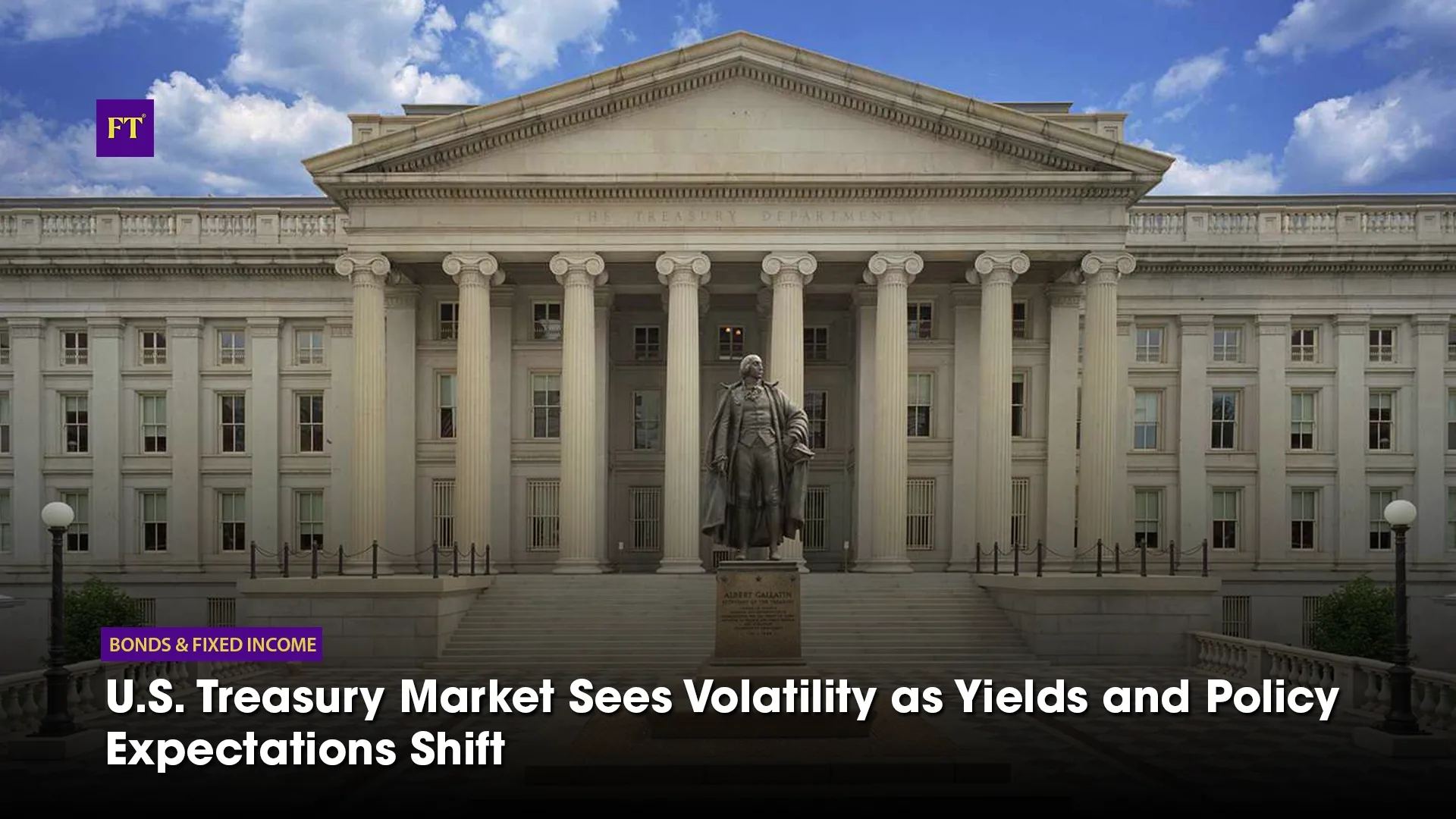
U.S. Treasury Market Sees Volatility as Yields and Policy Expectations Shift
Government bonds have remained sensitive to incoming data, particularly indicators tied to growth and inflation. That sensitivity has shaped price action in both short and long maturities, while reinforcing a more cautious tone among investors.
By