
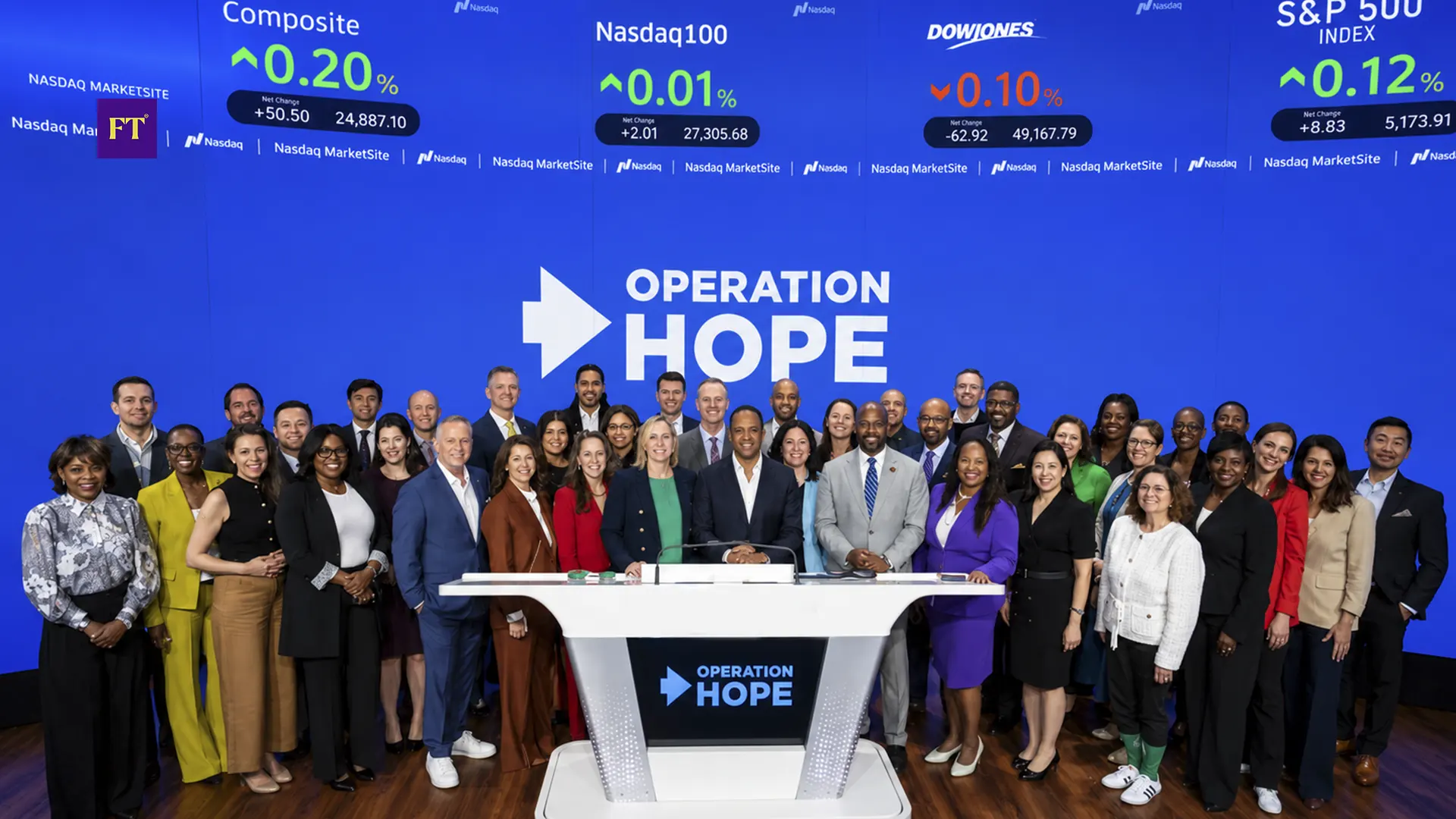
 Photo by FT
HOPE Insider Survey
- Many households continue to struggle with everyday expenses, debt obligations, and limited financial flexibility amid higher household costs.
- Participation in financial literacy programs and coaching sessions has expanded across both community and online formats.
- Survey respondents report more organized budgeting, improved expense tracking, and a better understanding of credit management after taking part in financial education programs.
ATLANTA, Ga., May 23, 2026 — Operation HOPE’s First Quarter 2026 Hope Insider Survey highlights ongoing financial strain across participating households. Many respondents report difficulty meeting everyday expenses due to limited income growth and higher household expenses. Housing, utilities, transport, and food remain the main categories shaping household budgets, while most participants report reduced discretionary spending over an extended period.
Debt continues to be a major concern across responses. Credit card balances and personal loans are common, and many households report longer repayment timelines. Some respondents also report using credit to manage routine expenses during income shortfalls. Overall, the findings show limited financial flexibility for many households, with income and expenses remaining uneven.
Financial Literacy Participation Expands
Participation in Operation HOPE financial literacy programs has increased across both community sessions and online formats. Respondents report greater engagement with training on budgeting, credit use, savings, and debt management. Many participants say they learned structured budgeting for the first time, including tracking spending, separating essential and non-essential expenses, and setting basic savings goals.
Online workshops and mobile learning tools have expanded access to financial education. These formats allow participants with limited time or travel options to take part. Financial coaching is also widely used, with one-to-one sessions helping participants understand debt priorities, credit usage, and short-term planning.
Households Adjust Spending Behavior
Many respondents report changes in spending habits due to ongoing financial strain, including reduced discretionary spending and more careful price comparisons before purchases. Some households have started small emergency savings, though contributions are often irregular. Participants still describe these savings as helpful for unexpected expenses such as medical bills or repairs.
Credit use is also changing across households. Some respondents report reduced reliance on credit for daily expenses and greater use of structured repayment plans. Debt consolidation is also mentioned as a way to simplify repayments and manage obligations more efficiently.
Financial Literacy Linked to More Organized Financial Behavior
Survey responses show a link between financial literacy participation and more organized money management. Participants report improved budgeting habits and more consistent expense tracking, with many saying they now plan monthly spending more carefully.
Credit understanding has also improved among many respondents, including greater awareness of credit scores, repayment schedules, and the effects of missed payments. Community workshops are described as useful spaces for shared learning and discussion of financial challenges, while digital tools such as budgeting apps support spending tracking and reinforce lessons from coaching sessions. Overall, respondents report a more structured financial organization following participation in financial literacy programs, even as financial strain continues.
Broader Survey Findings
The survey includes participants from different income groups, including working adults and small business owners. Financial strain remains common across responses, with many households continuing to struggle with balancing income and rising expenses.
At the same time, participation in financial literacy programs continues to grow across both in-person and online formats. Respondents often describe financial education as a tool for managing daily financial decisions rather than a fast solution to financial problems. Survey findings suggest that financial literacy participation is linked with more structured budgeting and debt management habits, while economic strain remains present.
Survey responses show a link between financial literacy participation and more organized money management. Participants report improved budgeting habits and more consistent expense tracking, with many saying they now plan monthly spending more carefully.
Related Topics

A Year After Its Release, Treasury’s Financial Inclusion Strategy Moves from Policy to Execution
The strategy presents financial inclusion as the result of how payment rails, benefits, credit and savings programs are structured and delivered, rather than as a set of policy statements.
By
The U.S. Treasury’s Role in National Finance and Global Economic Affairs
The Treasury represents the United States in international financial forums such as the International Monetary Fund and the World Bank. It coordinates with other countries on exchange rates, trade balances, and crisis responses, helping shape a stable global financial environment.
By
How U.S. Treasury Anchors Federal Finances, Economic Policy, and Global Financial Stability
The Treasury represents the United States in international financial forums such as the International Monetary Fund and the World Bank. It coordinates with other countries on exchange rates, trade balances, and crisis responses, helping shape a stable global financial environment.
By

Workplace Finance Tools Gain Attention as Frontline Workers Seek Better Money Management
New research from workplace finance firm Stream suggests that financial literacy alone may not be enough for frontline workers, with access to suitable financial tools playing a larger role in savings behavior and money management.
By